The Concordia Neighborhood Association board is a group of 13 volunteers who all live in, work in or own property in Concordia. They are dedicated to helping the community and meet once a month to discuss neighborhood issues and plan events.
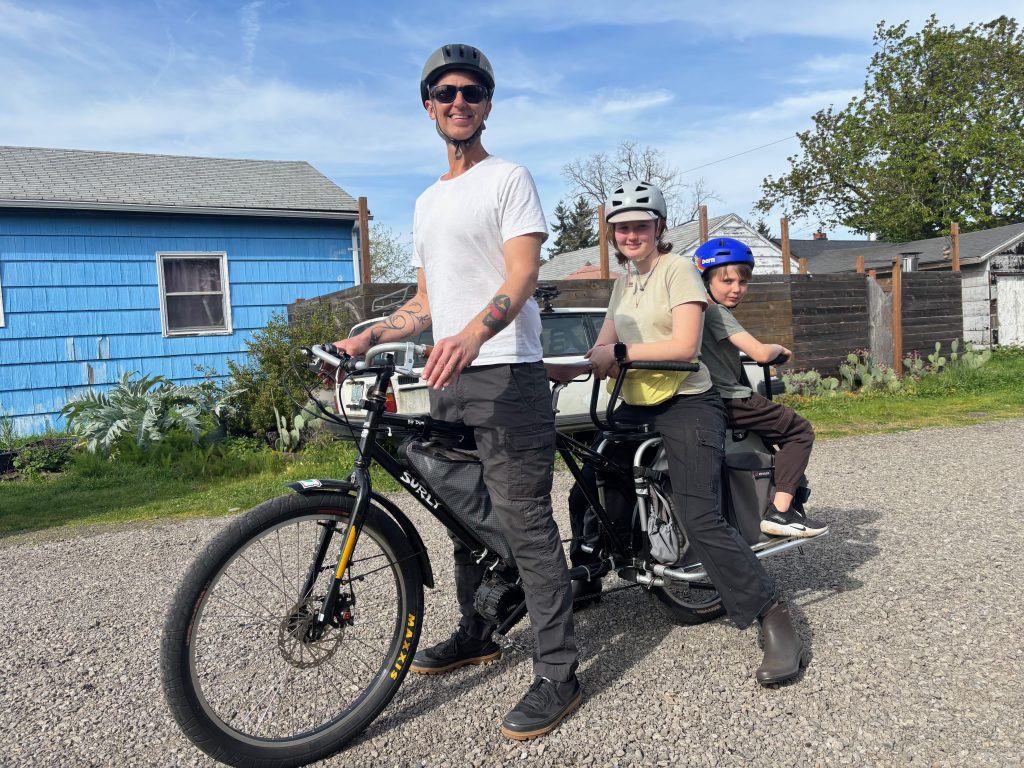
Tell me about your work with CNA.
I have an MBA from the University of Oregon and I have a consulting business. For 20 years, I worked in and managed custom fabrication shops (mostly woodworking and metal work) so now I help small business owners manage their manufacturing, and construction companies. I have 3 ongoing long-term clients though I do take short-term projects as well. At times, I play an advisory role and other times I directly manage aspects or projects of the business.
I first got involved with CNA in 2023. We always read the paper and I answered an ad in the paper for a treasurer.
Where do you live?
My wife Elsbeth and I have lived in our home on NE 27th and Alberta for 20 years. Elsbeth is a radiation therapist at OHSU and mostly treats cancer patients.
Our house was built in 1913. It was a 2 bedroom 1 bath and it was in pretty bad shape when we moved into it. We had two kids and so we added a dormer with a second bathroom upstairs. I did all the work myself except for the electrical and plumbing. I enjoy the work but I’m glad to see it come to a close. Our last project will be the floors, and putting in air conditioning.
What do you do in your free time?
My family and I enjoy camping, hiking and paddleboarding.
I love spending time with my 12-year old daughter, Ramona and my seven-year old son, Arlo. Ramona and I are both learning to play piano from an app. Sometimes we get in to music theory. Arlo loves Legos and building projects of any kind. We have a little workshop in our basement and are building a treehouse together. Both kids love rock climbing, swimming and we are avid bike commuters.
What do you like about living in Concordia?
We enjoy how walkable the neighborhood is. We love Salt and Straw, Alberta Park, and we’re members of the food coop.
We enjoy spending time with our neighbors. Marcia Cole, a retired hairdresser, who has lived in the house next door to us for 50 years is good friends with my son, Arlo. It’s very sweet. I play guitar and have lately been playing a lot of old time music with my other neighbor Boris who plays the banjo and the fiddle.